Below is a comprehensive, sourced article answering “Do small businesses in Ghana need auditors?” — with clear citations to the latest public guidance, practical recommendations, and a visual summary (I’ve displayed an illustrative table + chart for quick reference). I explain the law, recent changes, practical implications for small businesses, and steps to decide whether you need an auditor.
Do small businesses in Ghana need auditors?
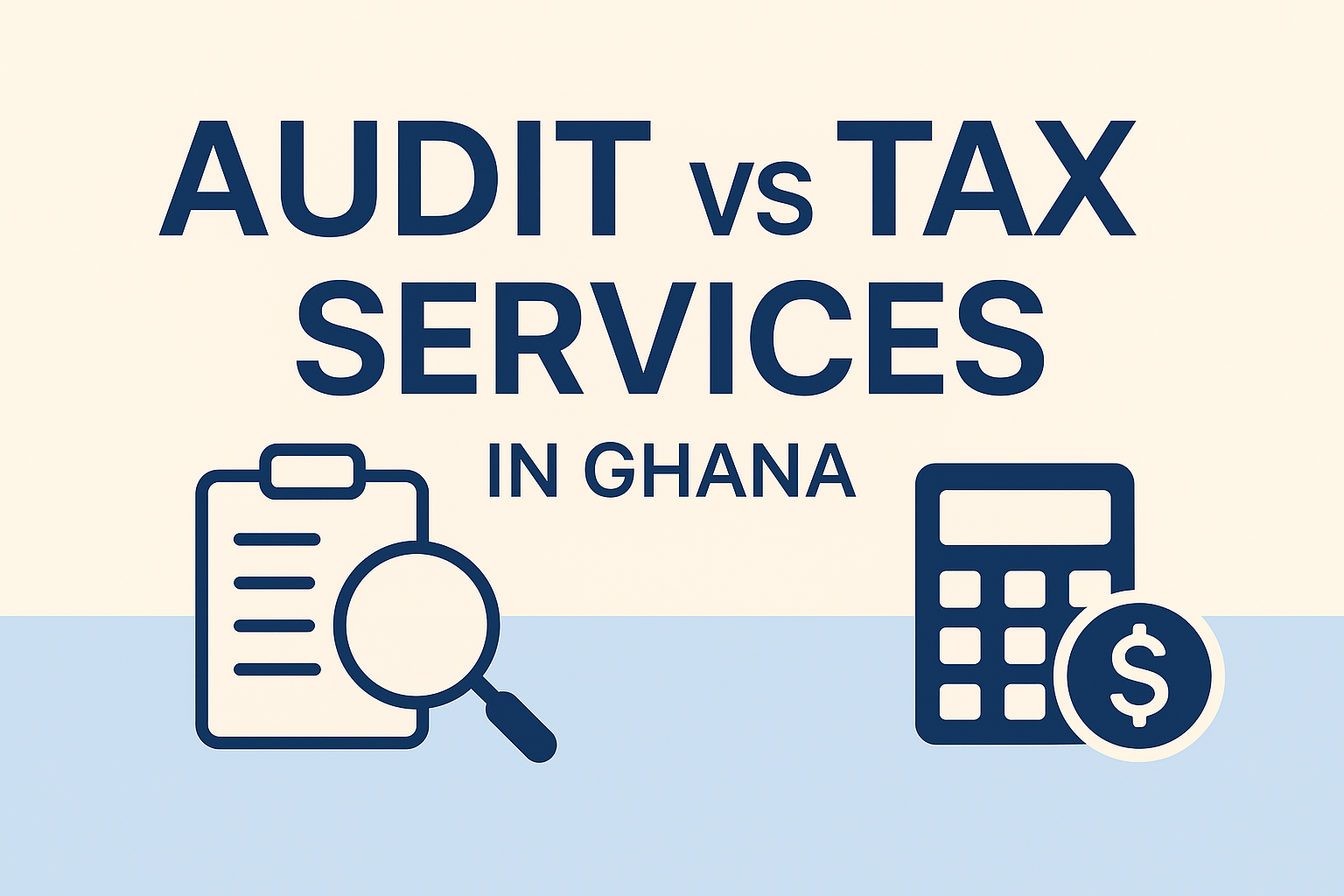
Short answer: It depends. Historically, Ghana’s Companies Act required audits for companies; however, regulatory updates and ORC guidance in 2025 introduced audit exemptions or limited-review options for small companies. Public interest entities, listed companies, and large companies still require statutory audits. Small, non-PIE companies may now be exempt from full financial-statement audits and instead be subject to less onerous review engagements — but details and compliance conditions matter. (Office of Registrar Companies Ghana)
1. Legal & regulatory background (what the law says)
- Companies Act, 2019 (Act 992): The Companies Act generally requires companies to prepare annual financial statements; historically these are audited by a qualified auditor before distribution or filing. This remains the statutory foundation for financial reporting and audits in Ghana. (IFAC)
- ICAG (Institute of Chartered Accountants, Ghana): ICAG sets professional standards (including auditing standards), licensing, and ethical rules. Auditors performing statutory audits must be ICAG-registered and follow agreed standards (ISA / IAASB-adopted). (icagh.org)
- Office of the Registrar of Companies (ORC) – 2025 classification & directive: In January 2025 the ORC published classification guidance and a press release explaining exemptions/waivers for small companies from full financial-statement audit obligations in certain circumstances, replacing them with lighter “limited review” or similar review engagements in line with ISRE/IAASB pronouncements for small entities. This change is the primary driver behind the current “small company audit exemption” status in Ghana. (Office of Registrar Companies Ghana)
What this means: The law still requires audited financial statements for many companies — especially PIEs, listed firms, and large companies — but the ORC guidance introduces thresholds / classification rules allowing small companies to avoid full statutory audits in favour of less onerous reviews, subject to meeting defined criteria and compliance with the ORC’s rules.
2. Who definitely still needs an auditor?
- Public Interest Entities (PIEs) and listed companies — mandatory statutory audits, and audit reports must be issued by ICAG-registered auditors (and often additional regulators’ requirements apply). (IFAC)
- Large companies as defined by the Companies Act and ORC classification — generally remain subject to audit requirements; thresholds and definitions are set by ORC guidance, so confirm whether your company meets the “large” criteria. (Office of Registrar Companies Ghana)
3. Small companies: the new position (exemption & limited reviews)
- ORC press release (Jan 2025): Introduced classification of companies (small, medium, large) and explained that small companies may be exempt from full auditing, instead being subjected to limited review engagements or other less onerous assurance services aligned with IAASB/ISRE standards. This is intended to reduce compliance costs for small businesses while maintaining reasonable oversight. (Office of Registrar Companies Ghana)
- Practical nuance: Exemption isn’t a blanket “no audit” rule for all small businesses. It depends on meeting the ORC’s small-company criteria, remaining compliant with filing obligations, and not being within other categories (e.g., part of a group or otherwise regulated entity) that revoke exemption.
4. Why the change? (policy rationale)
Regulators and industry stakeholders have argued that mandatory full audits for micro and small companies impose high costs and limited benefit; many small firms get more value from advisory services, improved internal controls, or targeted reviews rather than full-scope audits. The 2025 ORC move aligns with global trends toward proportionate reporting requirements for small entities. (World Bank)
5. Practical implications for small business owners
- If you qualify as a “small company” under ORC criteria: you may not be required to obtain a full statutory audit — but you should expect at least a limited review or other assurance steps; check ORC rules and ensure you meet the exemption conditions. (Office of Registrar Companies Ghana)
- If your company is part of a corporate group or has external investors: exemptions may not apply — group thresholds or investor agreements often require audited statements. (ACCA Global)
- If you plan to borrow, apply for grants, or attract investors: many banks and investors still prefer audited statements as superior assurance; an audit can improve credibility even if not statutorily required.
- Quality and compliance: ICAG rules still govern audit quality. Even where exempt, following good accounting practices and engaging a professional reviewer or chartered accountant is recommended. (icagh.org)
6. A robust decision checklist (should my small business get an audit?)
- Are you a public interest entity or listed? → Yes → Audit required.
- Does ORC classify you as a ‘small company’ under its 2025 criteria? → If yes, you may qualify for exemption/limited review. Check ORC PDF/press release. (Office of Registrar Companies Ghana)
- Are you part of a consolidated group that requires audited accounts? → If yes → Audit likely required. (ACCA Global)
- Do lenders, investors, or grant providers require audited financials? → If yes → Audit recommended.
- Do you want higher credibility and better access to finance? → Audit recommended even if legally exempt.
- Is your bookkeeping complete and controls strong? → If not, you may need an initial clean-up or limited review which could be cheaper than a full audit later.
7. Costs and alternatives
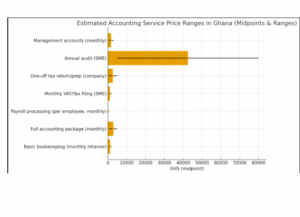
- Cost: Audits can be expensive relative to small businesses’ budgets. The exact quote depends on firm, complexity, and state of records. Many SME owners find a limited review or compilation plus targeted advisory (bookkeeping improvement, tax support) gives better value. See our article and pricing guide for typical fee ranges (for estimates). (icagh.org)
- Alternatives:
- Limited review engagements (ISRE): less scope than audits, cheaper, but still provides a degree of assurance. (TEMPLARS)
- Compilation engagements: preparation of financials from client data (no assurance) — cheapest but limited credibility.
- Accounting & bookkeeping retainers + management accounts: helps improve books and may remove the need for costly audit clean-ups later.
8. How to comply (practical steps)
- Check ORC classification: Read the ORC press release and classification PDF (Jan 2025) to confirm your company’s status and the exact exemption criteria. (Office of Registrar Companies Ghana)
- Confirm with ICAG / engage a Chartered Accountant: Even exempt companies should consult an ICAG-registered practitioner to determine the right engagement type (limited review, compilation, advisory). (icagh.org)
- Ask for a written scope and quotation: get the exact deliverables, timelines, and pricing for audit vs limited review.
- Document your internal controls and clean your books: better records reduce professional fees.
- If uncertain, choose prudence: where investor/lender expectations exist, an audit may still be the safest route.
9. Sources & further reading
- Office of the Registrar of Companies (ORC) — Press Release & Classification of Companies as Small/Medium/Large (Jan 2025). (Office of Registrar Companies Ghana)
- Citinewsroom — ORC waives financial statement audit for small businesses (Jan 27, 2025). (CitiNewsroom.com)
- Institute of Chartered Accountants, Ghana (ICAG) — standards & registration. (icagh.org)
- Companies Act, 2019 (Act 992) — statutory provisions on audits and company obligations. (IFAC)
- Practitioner & industry commentary on audit cost drivers and SME accounting in Ghana. (icagh.org)
Visual summary (what I generated for you)
I displayed an interactive table summarizing company categories and their typical audit requirements (illustrative), and a simple bar chart that visually marks which company categories generally require audits (1 = yes; 0 = exempt). The chart and table are illustrative — they translate the ORC/Companies Act distinctions into an at-a-glance visual. (If you’d like I can export the chart as PNG/SVG for your article.)
Final recommendation
- Check your ORC classification and read the Jan 2025 ORC guidance first (this determines statutory requirements). (Office of Registrar Companies Ghana)
- Engage an ICAG-registered accountant for tailored advice — even exempt small businesses benefit from professional reporting and limited reviews. (icagh.org)
- Use audit selectively: audits bring credibility but cost money; for many small Ghanaian businesses, a limited review + solid bookkeeping + targeted advisory is a cost-effective, compliant path.